Keywords
Chikungunya fever
Diagnosis
Pathogenesis
Management
Categories
How to Cite
Abstract
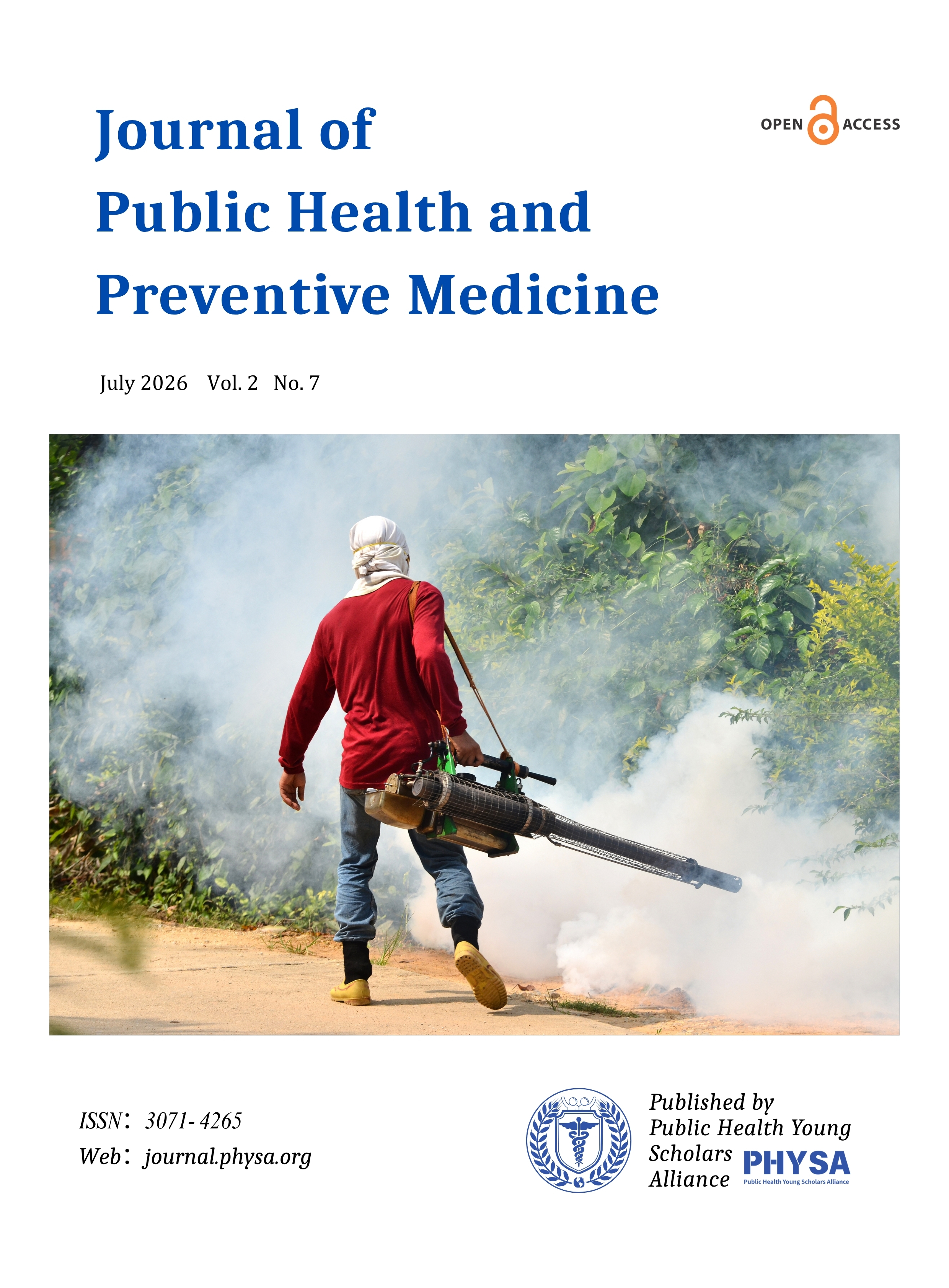
Chikungunya fever (CHIKF), caused by the chikungunya virus (CHIKV), is an acute mosquito-borne viral disease that poses a rising global public health threat. To date, no specific antiviral therapies are available, and precise diagnosis is pivotal for optimal clinical management. This review systematically summarizes the latest evidence on CHIKV pathogenesis, diagnostic strategies, and clinical management based on English literature published between 2004 and 2025. Virus-host interactions dominate disease progression, including viral entry mediated by E1/E2 envelope proteins binding to host Mxra8 receptors and suppressed type I interferon responses via nsP2-mediated inhibition of the JAK-STAT pathway. The E1-A226V mutation greatly enhances viral transmissibility in Aedes albopictus, fueling the global spread of CHIKV. Clinically, persistent chronic arthropathy serves as the major long-term complication in 25%–40% of infected patients. Current diagnostic approaches consist of real-time RT-PCR as the early gold-standard test and serological antibody detection, whereas serological cross-reactivity with other arboviruses and inconsistent detection results frequently cause clinical misdiagnosis, and the confirmatory plaque reduction neutralization test (PRNT) is impractical for routine use. Clinical care for CHIKF remains predominantly supportive, relying on symptomatic treatment and close patient monitoring. Two FDA-approved vaccines have been licensed via accelerated approval based on immunogenicity surrogates, with solid clinical protective efficacy yet to be validated. This review highlights that in-depth elucidation of CHIKV pathogenic mechanisms, refinement of diagnostic accuracy, and development of targeted therapeutics are essential to improve the overall management of chikungunya fever.References
[1] Weaver, S. C., & Forrester, N. L. (2015). Chikungunya: Evolutionary history and recent epidemic spread. Antiviral Research, 120, 32–39. https://doi.org/10.1016/j.antiviral.2015.04.016
[2] Tsetsarkin, K. A., Vanlandingham, D. L., McGee, C. E., & Higgs, S. (2007). A single mutation in chikungunya virus affects vector specificity and epidemic potential. PLOS Pathogens, 3(12), e201. https://doi.org/10.1371/journal.ppat.0030201
[3] Paixão, E. S., Rodrigues, L. C., Costa, M. D. C. N., Itaparica, M., Barreto, F., Gérardin, P., & Teixeira, M. G. (2018). Chikungunya chronic disease: a systematic review and meta-analysis. Transactions of the Royal Society of Tropical Medicine and Hygiene, 112(7), 301–316. https://doi.org/10.1093/trstmh/try063
[4] Schwartz, O., & Albert, M. L. (2010). Biology and pathogenesis of chikungunya virus. Nature Reviews Microbiology, 8(7), 491–500. https://doi.org/10.1038/nrmicro2368
[5] Thiberville, S. D., Moyen, N., Dupuis-Maguiraga, L., Nougairede, A., Gould, E. A., Roques, P., & de Lamballerie, X. (2013). Chikungunya fever: epidemiology, clinical syndrome, pathogenesis and therapy. Antiviral research, 99(3), 345–370. https://doi.org/10.1016/j.antiviral.2013.06.009
[6] Fros, J. J., Liu, W. J., Prow, N. A., Geertsema, C., Ligtenberg, M., Vanlandingham, D. L., Schnettler, E., Vlak, J. M., Suhrbier, A., Khromykh, A. A., & Pijlman, G. P. (2010). Chikungunya virus nonstructural protein 2 inhibits type I/II interferon-stimulated JAK-STAT signaling. Journal of virology, 84(20), 10877–10887. https://doi.org/10.1128/JVI.00949-10
[7] Göertz, G. P., McNally, K. L., Robertson, S. J., Best, S. M., Pijlman, G. P., & Fros, J. J. (2018). The Methyltransferase-Like Domain of Chikungunya Virus nsP2 Inhibits the Interferon Response by Promoting the Nuclear Export of STAT1. Journal of virology, 92(17), e01008-18. https://doi.org/10.1128/JVI.01008-18
[8] Bae S, Lee JY, Myoung J. Chikungunya Virus-Encoded nsP2, E2 and E1 Strongly Antagonize the Interferon-β Signaling Pathway. Journal of Microbiology and Biotechnology. 2019 Nov;29(11):1852-1859. https://doi.org/10.4014/jmb.1910.10014. PMID: 31635445.
[9] Teo TH, Lum FM, Claser C, et al. A pathogenic role for CD4+ T cells during Chikungunya virus infection in mice. Journal of Immunology (Baltimore, Md. : 1950). 2013 Jan;190(1):259-269. https://doi.org/10.4049/jimmunol.1202177. PMID: 23209328.
[10] Chow, A., Her, Z., Ong, E. K., Chen, J. M., Dimatatac, F., Kwek, D. J., Barkham, T., Yang, H., Rénia, L., Leo, Y. S., & Ng, L. F. (2011). Persistent arthralgia induced by Chikungunya virus infection is associated with interleukin-6 and granulocyte macrophage colony-stimulating factor. The Journal of infectious diseases, 203(2), 149–157. https://doi.org/10.1093/infdis/jiq042
[11] Kashyap, R. S., Morey, S. H., Chandak, N. H., Purohit, H. J., Taori, G. M., & Daginawala, H. F. (2010). Detection of viral antigen, IgM and IgG antibodies in cerebrospinal fluid of Chikungunya patients with neurological complications. Cerebrospinal fluid research, 7, 12. https://doi.org/10.1186/1743-8454-7-12
[12] Seyyadali Alshad, Shukla Alka, Girithar Mahaadeva. et al. (2025). Unmasking Cross-Reactivity: A Comparative Evaluation of Serological and Molecular Diagnostics in Dengue and Chikungunya Co-infections. Journal of Clinical Immunology & Microbiology. 6(2), 1-7. https://doi.org/10.46889/JCIM.2025.6209.
[13] European Medicines Agency. (2024). IXCHIQ: EPAR public assessment report. European Medicines Agency
[14] European Medicines Agency. (2025). IXCHIQ EPAR risk management plan. European Medicines Agency.
[15] Weber WC, Streblow DN, Coffey LL. Chikungunya Virus Vaccines: A Review of IXCHIQ and PXVX0317 from Pre-Clinical Evaluation to Licensure. Biodrugs: Clinical Immunotherapeutics, Biopharmaceuticals and Gene Therapy. 2024 Nov;38(6):727-742. https://doi.org/10.1007/s40259-024-00677-y. PMID: 39292392; PMCID: PMC11530495.
[16] U.S. Food and Drug Administration. (2025). IXCHIQ (chikungunya vaccine, live) and VIMKUNYA (chikungunya vaccine, inactivated) approval information. U.S. FDA.
[17] Robert Koch Institute. (2025). Chikungunya vaccination: Evidence report. Epidemiologisches Bulletin, 28, 1–20.
[18] National Health Commission of the People’s Republic of China. (2025). Diagnosis and treatment protocol for chikungunya fever (2025 edition). National Health Commission of the People’s Republic of China.

This work is licensed under a Creative Commons Attribution 4.0 International License.
Copyright (c) 2026 Journal of Public Health and Preventive Medicine